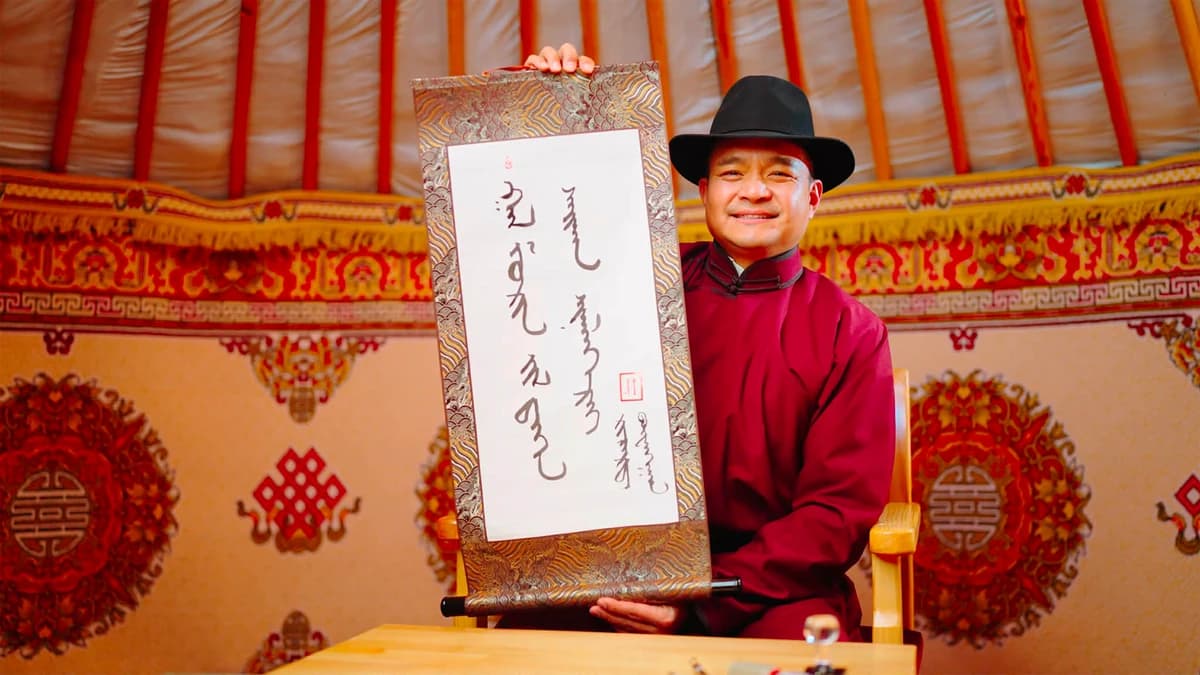
Richard Buangan: Mongolians are warm, hospitable, and direct
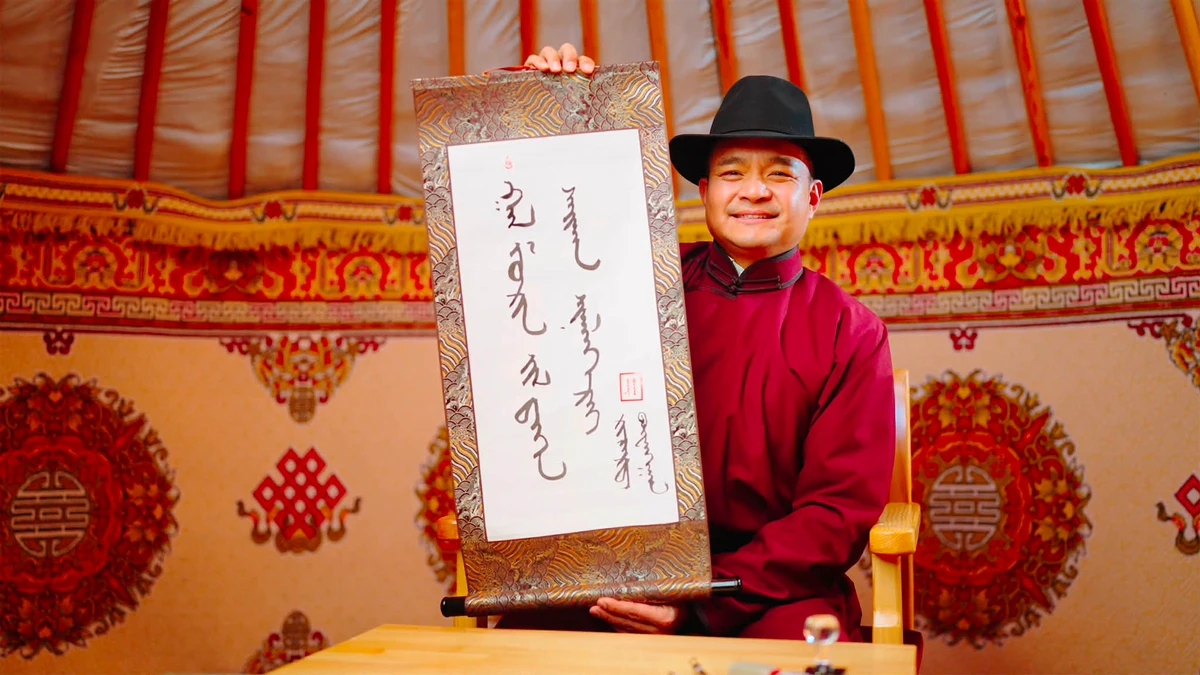
U.S. Ambassador Richard R. Buangan
-Lunar New Year is approaching. Have you prepared your deel to wear for the occasion? Do you find wearing a Mongolian deel uncomfortable?
Yes, I have my deel ready! Actually, I have several now. And no, I don't find it uncomfortable at all. Once you get used to it, it's quite practical, especially in the Mongolian climate. The deel is designed for Mongolia’s environment and I really appreciate the craftsmanship and tradition behind it.
-The Mongolian deel suits you very well. Do you buy them yourself, or are they usually given to you as gifts?
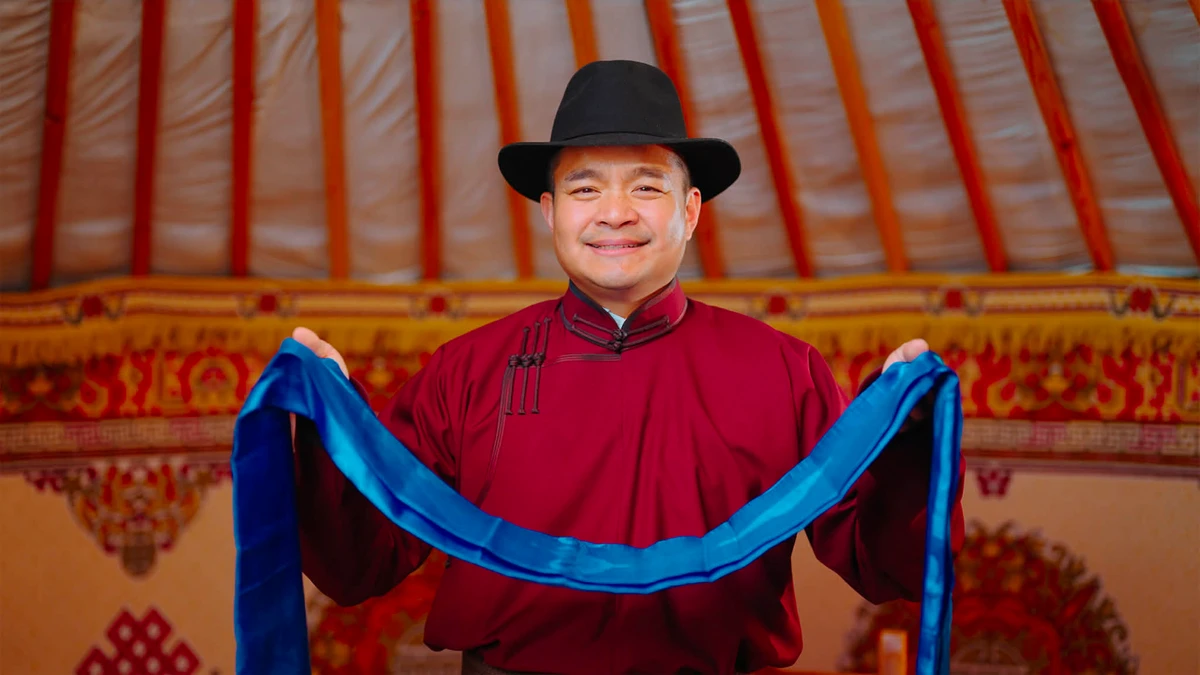
Thank you, Batik Tailors makes my custom deels. Wearing deels helps me participate more fully in Mongolian culture. When I wear a deel to Tsagaan Sar celebrations or other traditional events, it's my way of showing respect for Mongolian traditions and its people. Last Naadam, I was proud to wear an ethnic deel from the western provinces to showcase Mongolia’s diverse culture and history.
-Although you are a foreigner, you seem to have a Mongolian appearance and demeanor. What impression has Mongolia made on you?
Mongolia, both the country and Mongolian people, have made a profound impression on me during my three years as Ambassador.
What strikes me most is the resilience and independence of the Mongolian people. You've maintained your identity and sovereignty for centuries. That is very inspiring. I'm also deeply impressed by Mongolia's commitment to democracy. You chose democracy in 1990, and despite challenges, you've maintained it. That matters enormously.
Then there is Mongolia's natural beauty. The openness and the silence of the Mongolian countryside put everything into perspective. It's humbling and inspiring at the same time.
-Where in Mongolia have you found the most beautiful nature and the greatest sense of peace? I have heard that you enjoy meditation and traveling to the countryside, is that true?
I do try to get out into the countryside whenever I can. It's important for me personally, but it's also important for understanding Mongolia. You can't really know Mongolia if you only stay in Ulaanbaatar. I've been fortunate to travel to many parts of Mongolia. The quiet of the Mongolian countryside is conducive to reflection and clarity. In my role, I need to make important decisions, and that requires clear thinking. The peace I find in Mongolia's nature helps with that.
-How is your progress in learning traditional Mongolian script? Why did you decide to learn it, and do you find it difficult?
I wanted to learn traditional Mongolian script to understand Mongolia better. Traditional Mongolian script is beautiful but challenging. Every time I make progress, I feel like I understand Mongolia a little better. I'm not fluent by any means, but I can recognize some words and phrases, and I'm working on it. The embassy’s language instruction team and my language teacher Bold are very patient with me, and they inspire me to work hard to learn the Mongolian language and traditional script.
-What do you find most enjoyable and most challenging about living in Mongolia? For example, Mongolian winters are very cold. Are there times when the cold discourages you?
What I find most enjoyable is the people. Mongolians are warm, hospitable, and direct. Americans are also known for being direct, so I appreciate Mongolians’ straightforwardness. I also love the sense of history and tradition that's still alive in Mongolia.
As for challenges, I won’t pretend that Mongolia isn’t really cold, especially for someone like me who grew up in really warm places! It doesn’t discourage me though; it’s just a part of living in Mongolia. The bigger challenge, honestly, is the distance from Washington and the time difference. When I need to coordinate with colleagues in D.C., I'm often working at odd hours, but that's part of the job.
-You are considered a key bridge in Mongolia-U.S. relations. How would you assess the current state of foreign relations between our two countries?
I'm very proud of what we've accomplished together during my time in Mongolia. Despite the geographical distance between our countries, the United States is proud to be Mongolia's "Third Neighbor," and it's a commitment we take seriously.
The U.S.-Mongolia relationship is strong and built on a solid foundation. Our close defense cooperation that has made Mongolia one of the premier UN peacekeeping contributors in the world. Our people-to-people ties with over 1,000 Mongolian students studying in America annually and almost 1,500 Peace Corps volunteers who have served here since 1991, and significant infrastructure investment like the $462 million U.S. Millenium Challenge Corporation Water Compact.
I want to highlight that the MCC Water Compact is making excellent progress. Overall compact completion is now about 97%, and we’re on time and on budget.
The two key infrastructure projects — the Advanced Water Purification Plant is 99% and the Wastewater Recycling Plant is almost 100% complete, and we expect to hand them over very soon, this spring.
However, we can and should do better, particularly on economic cooperation. We need to see more progress on improving the investment climate to unlock Mongolia's tremendous potential, especially in critical minerals, and create the conditions for American companies to invest here in ways that benefit both nations. The foundation is solid, but we can continue to build upon it, and that's exactly what we're working on doing.
-How close and friendly is your relationship with the Mongolian Ambassador to the United States? On social media, you have referred to him as your friend.
I have tremendous respect for Mongolia's Ambassador to the United States, and yes, I do consider him a friend. We work closely together to advance our shared interests, and we communicate regularly.
-What do you think should be the main focus in Mongolia-U.S. relations?
After nearly 40 years of diplomatic relations and seven years as a Strategic Partnership, we have a clear track record of what succeeds in this relationship. Rather than trying to do everything or chasing new initiatives that may or may not pan out, we should double down on our proven areas of cooperation and expand them.
-Some policies of the Trump administration have had a direct impact on Mongolia’s economy and society. Most recently, Mongolia was included among the countries temporarily restricted for immigration visas. How will this affect Mongolians planning to travel or study in the United States?
The U.S. paused issuance to all immigrant visa applicants of nationals of 75 countries, including Mongolia. This pause is to allow the Department to undergo a full review of all policies, regulations, and guidance to ensure that immigrants from these high-risk countries are unlikely to utilize public benefits in the U.S. The Department took this action based on indications that immigrants from these have an elevated risk of receiving public benefits in the U.S. This action applies to immigrant visas only, and does not apply to nonimmigrant visas, such as those for tourists, athletes, and skilled workers and their families.
-What is needed to increase U.S. investment in Mongolia?
I see the potential for tremendous trade and investment opportunities between the United States and Mongolia. American companies want to come to Mongolia, but we need to see greater transparency in the regulatory system and stronger action on corruption. Investors won’t come here if they don’t think it’s going to be a good deal for them – Mongolia needs to also think about it from the investors’ perspective.
-What is the current status of training English teachers in the United States? In general, how do the two countries cooperate in the field of education? Many young Mongolians are interested in studying in the U.S. but often lack financial means.
I can’t speak to the current status of U.S. domestic education policy, but I can say in Mongolia, we’ve worked closely with the Mongolian government to provide greater access to educational and English language opportunities. Last year, we partnered with the National University of Mongolia to open the Center of Excellence for English Language Teaching, a hub for high-quality English instruction and teacher training nationwide.
Our exchange programs remain the heart of our education collaboration. Many of Mongolia’s most prominent leaders, business people, and civil society are among the more than 2,000 alumni of U.S. government-funded exchange or training programs.
-Next year marks the 40th anniversary of the establishment of U.S.-Mongolia diplomatic relations. What activities is your embassy planning to mark this occasion?
We're already preparing to celebrate the 40th anniversary of U.S.-Mongolia bilateral relations in January 2027, so keep an eye on the Embassy’s social media in the coming year for more announcements.
However, 2026 is already an extraordinary year for both our nations. This year, the United States will celebrate “Freedom 250”, the 250th anniversary of U.S. independence. We have many plans to mark this momentous occasion. Mongolia will also celebrate the 820th anniversary of the Mongol Empire, a remarkable milestone in world history. The U.S. Embassy looks forward to collaborating with our Mongolian friends to honor these two significant anniversaries and highlighting the enduring partnership between our two nations.

Mono.mn
Мэдээний нийтлэгч
Сэтгэгдэл бичих
Хүндэтгэлтэй, соёлтой хэлж бичихийг хүсье. Сэтгэгдлийг нийтлэлийг уншигчид шууд харна.
Сэтгэгдлүүд (0)
Одоогоор сэтгэгдэл байхгүй байна. Та хамгийн түрүүнд сэтгэгдэл үлдээнэ үү.