Mapping russian disinformation activities in Mongolia

In a new study from DW Akademie and the Nest Center, researchers explore Russian disinformation in Mongolia through social listening.
Despite its small population, Mongolia has a highly developed and diverse media environment with widespread internet access. This openness, combined with its geographic position between Russia and China, makes the country particularly vulnerable to foreign disinformation. Russian and Chinese actors have long been involved in Mongolia’s political and social information space, with recent research highlighting how Russian disinformation has specifically entered public discourse. Mongolia’s unique media and geopolitical context makes it a revealing case study for understanding how such disinformation operates.
According to DW Akademie’s Patrick Benning, the study exposes Russian strategies that it has used in other parts of the world, yet are heightened due to the unique relationship Mongolia has with the two powers.
"We have not seen this level of coordination when it comes to countries of more minor significance in the region," Benning said. "Russia has the power to undermine Mongolia’s information integrity and it has since at least 2022."
Russian Disinformation
When the Nest Center initiated its investigation into Russian disinformation campaigns, it concentrated on Facebook, which serves as Mongolia’s predominant social media platform and primary news source. Recognizing this, Russian disinformation operatives allocate substantial resources to activities on Facebook.
Senior fact-checker Bilguun Shinebayar contributed to editing the study and pinpointed the principal objectives of disinformation efforts originating from Russia. In an interview with DW Akademie, Shinebayar stated, “Russia is engaged in disinformation campaigns primarily to maintain influence over Mongolia and deter other powers.”
A notable recent case involved the signing of a new investment agreement between Mongolia and France for a uranium mining project. Disinformation agents actively disseminated both factual and misleading content regarding the agreement and associated mining risks.
Shinebayar noted that although environmental and health concerns were referenced, the underlying motivation was geopolitical. He asserted that Russia perceives the partnership with France as a challenge to its regional interests—including its own uranium mining sector—while simultaneously encouraging Mongolia to join the Russian-led Eurasian Economic Union.
Complex Narratives
While mineral rights represent only one of many subjects identified by researchers, Russian disinformation campaigns address a broad spectrum of issues. These topics include promoting Russia's international image, coverage of the war in Ukraine, the Israel-Hamas conflict, and instances of anti-Chinese rhetoric.
According to the study, Russian disinformation frequently seeks to reinforce existing perspectives—such as pro-Russian attitudes that are already prevalent within certain populations. Alternatively, these efforts may aim to deflect attention from matters that could cast the Russian state in an unfavorable light.
The paper identifies four principal strategies employed by Russian disinformation practitioners: the "firehose of falsehood" (disseminating numerous narratives across various issues), "operation doppelganger" (imitating credible news outlets), "operation overload" (submitting fraudulent requests to fact-checking bodies), and "flooding the zone" (producing diverse narratives to create confusion and obscure factual information).
Collectively, these methods serve to undermine trust in informational systems and contribute to public confusion, particularly during periods of instability such as natural disasters, crises, and elections. They foster societal divisions and may lead to increased public apathy.
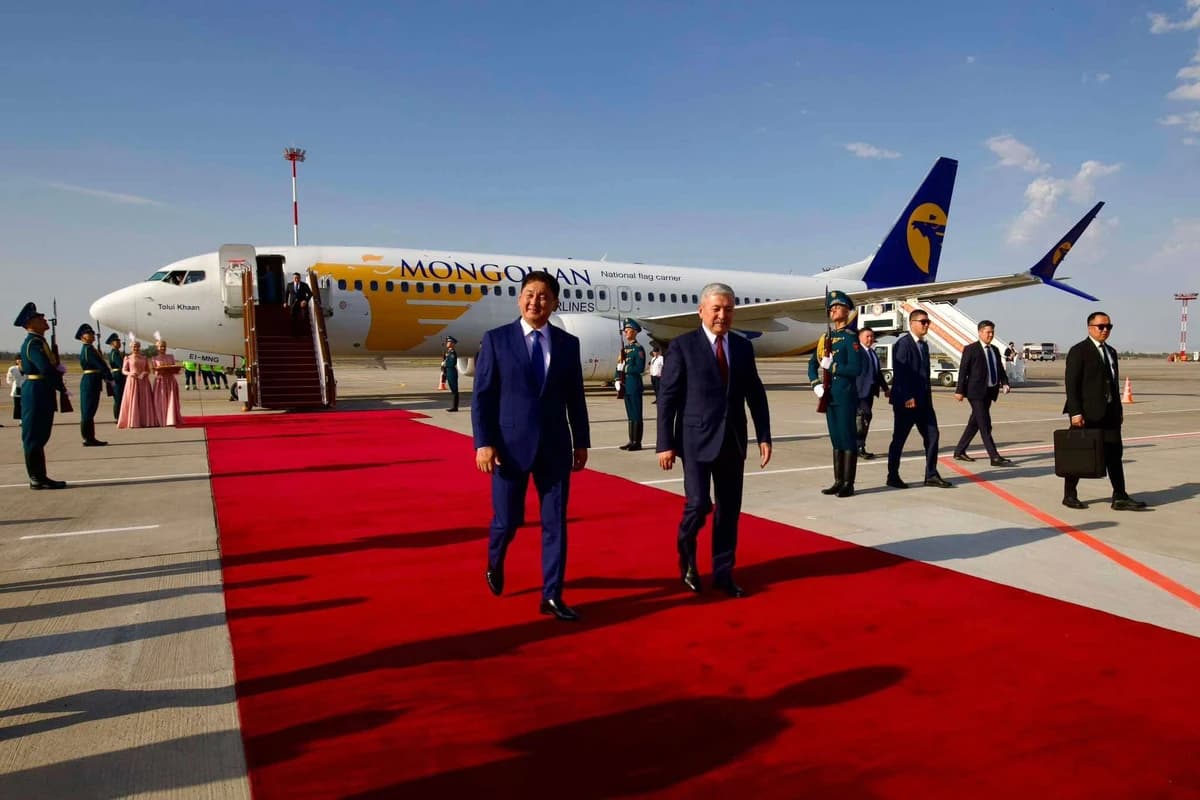
The research highlights a notable surge in disinformation activities during pivotal events in Mongolian-Russian relations, especially surrounding President Putin’s visit to Mongolia in September 2024.
Four Russian disinformation tactics
Flooding the zone: A larges number of narratives, regardless of veracity, are broadcast rapidly and repeatedly over multiple channels to sow doubt and confusion.
Firehosing: Similar to flooding the zone, but targets disinformation at specific groups.
Operation overload: Sending fake requests to fact-checkers to distract and diffuse resources.
Operation doppelganger: Using fake websites and logos from trusted news sources to spread disinformation.
Н.Чандмань
Олон улсын мэдээний тоймч
Сэтгэгдэл бичих
Хүндэтгэлтэй, соёлтой хэлж бичихийг хүсье. Сэтгэгдлийг нийтлэлийг уншигчид шууд харна.
Сэтгэгдлүүд (0)
Одоогоор сэтгэгдэл байхгүй байна. Та хамгийн түрүүнд сэтгэгдэл үлдээнэ үү.